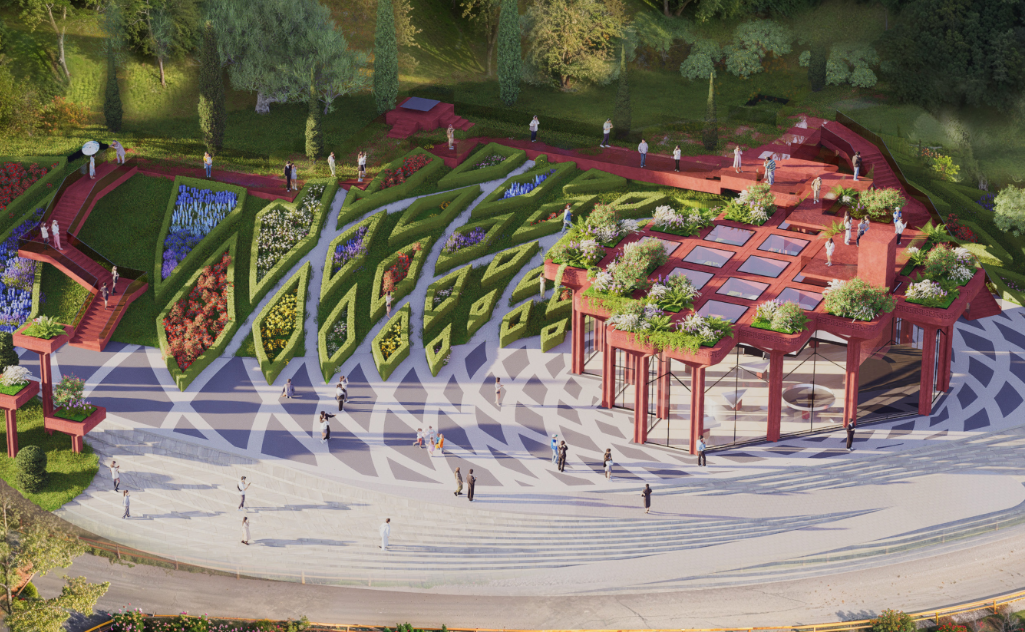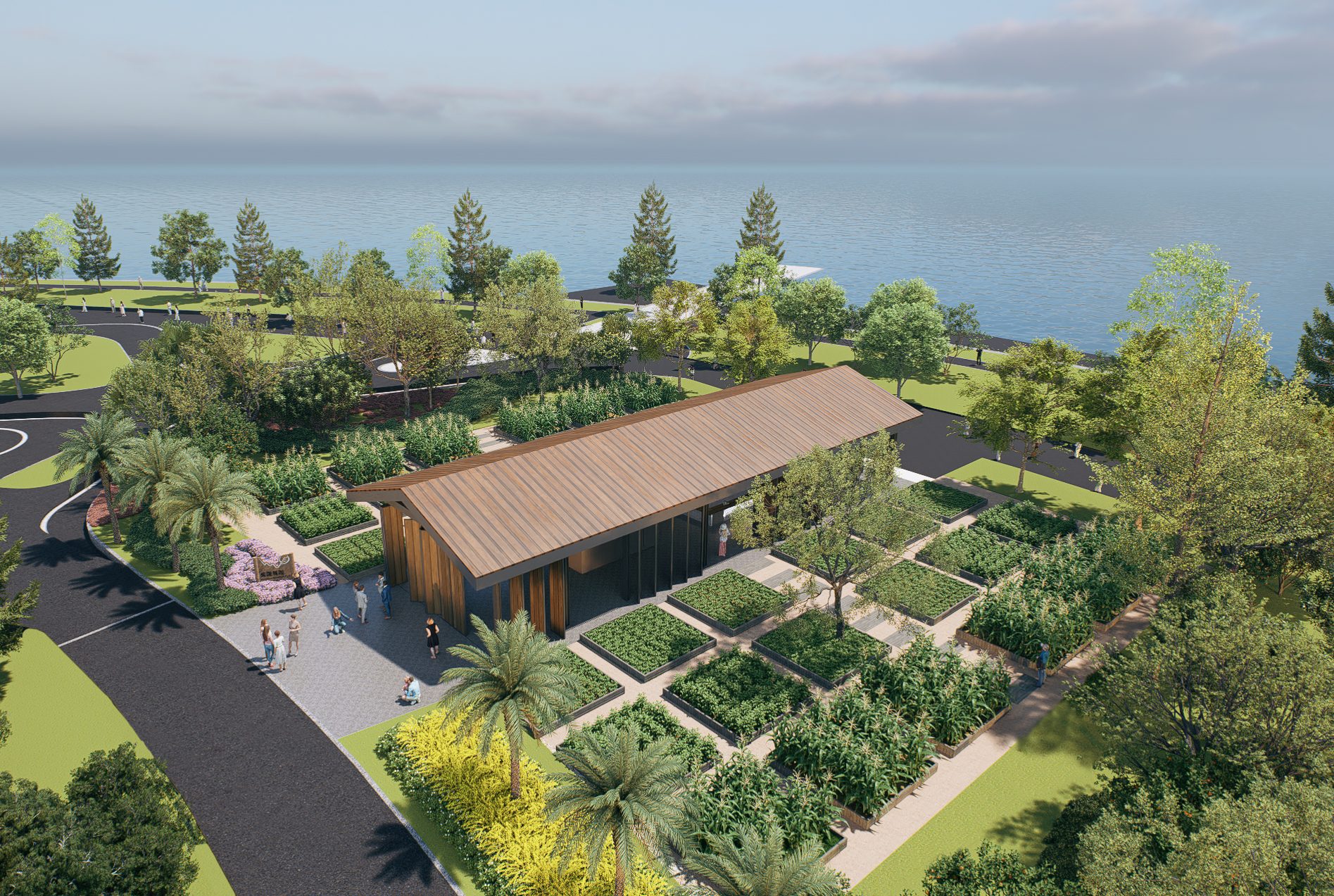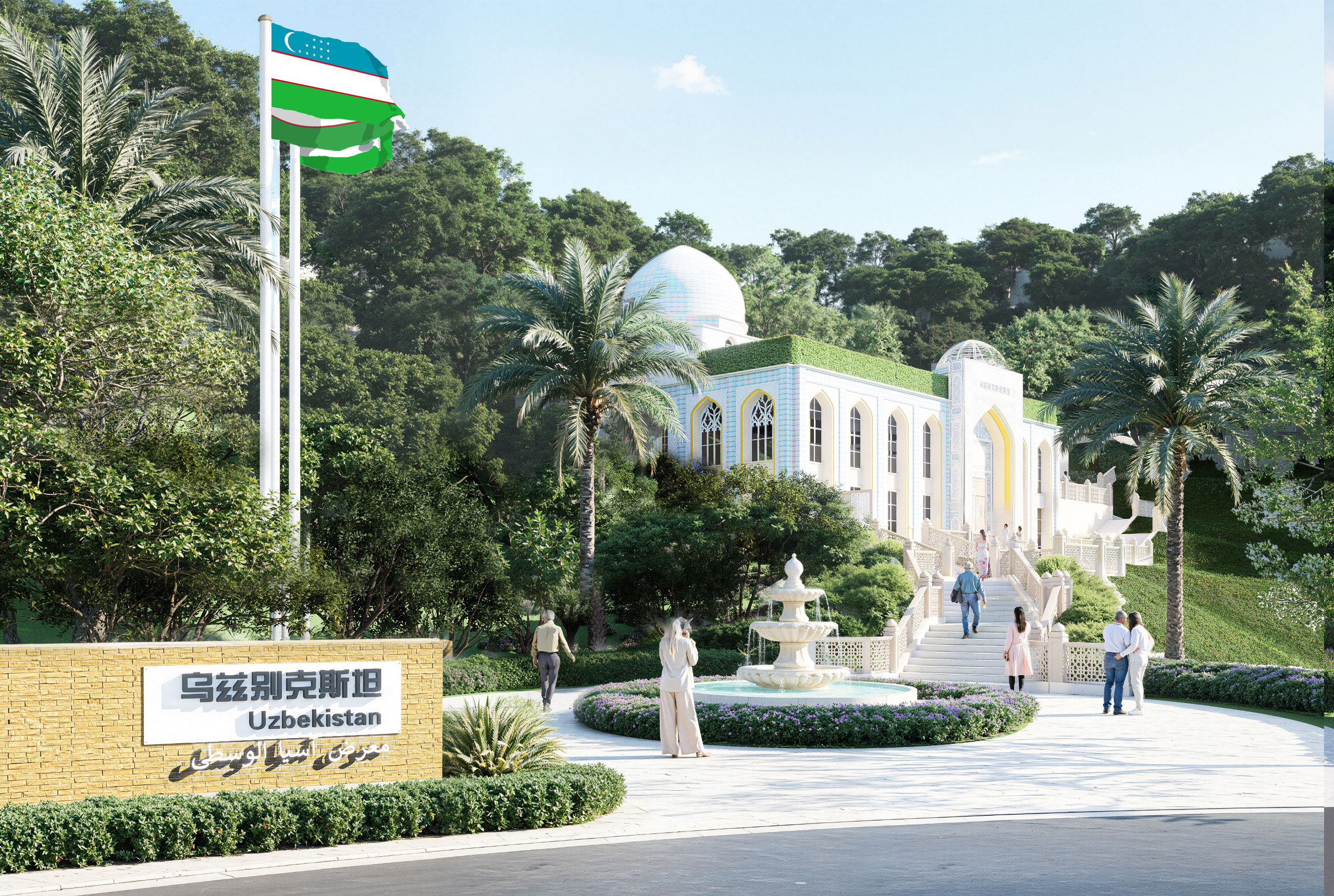
A rendering of the Uzbekistan Garden at the 15th China (Wenzhou) International Garden Expo. [Photo provided to ezhejiang.gov.cn]
The Uzbekistan Garden at the 15th China (Wenzhou) International Garden Expo, scheduled to run from April to July 2026, will present a contemporary interpretation of Silk Road exchanges between Central Asia and Wenzhou. The 2,500-square-meter garden will incorporate Uzbekistan's Silk Road heritage with Wenzhou's history as a key port on the Maritime Silk Road.
The garden draws inspiration from Uzbekistan's role as a crossroads of civilizations, with cities such as Samarkand and Bukhara once linking East and West through trade and cultural exchange. Wenzhou, meanwhile, was a key maritime trading port during the Song and Yuan dynasties (960-1368), transporting ceramics and silk to destinations across Asia and other regions.
The garden's design translates this shared history into architectural and landscape elements, with a clear central axis that will lead visitors from a ceremonial plaza to a domed structure inspired by traditional Central Asian architecture. Blue and purple glazed tiles, geometric paving patterns, and courtyards reflect Uzbek traditions, while local stone and materials ground the garden in Wenzhou's environment. More than 12,000 specially made glazed bricks have been produced by Wenzhou kilns, symbolizing cultural convergence.
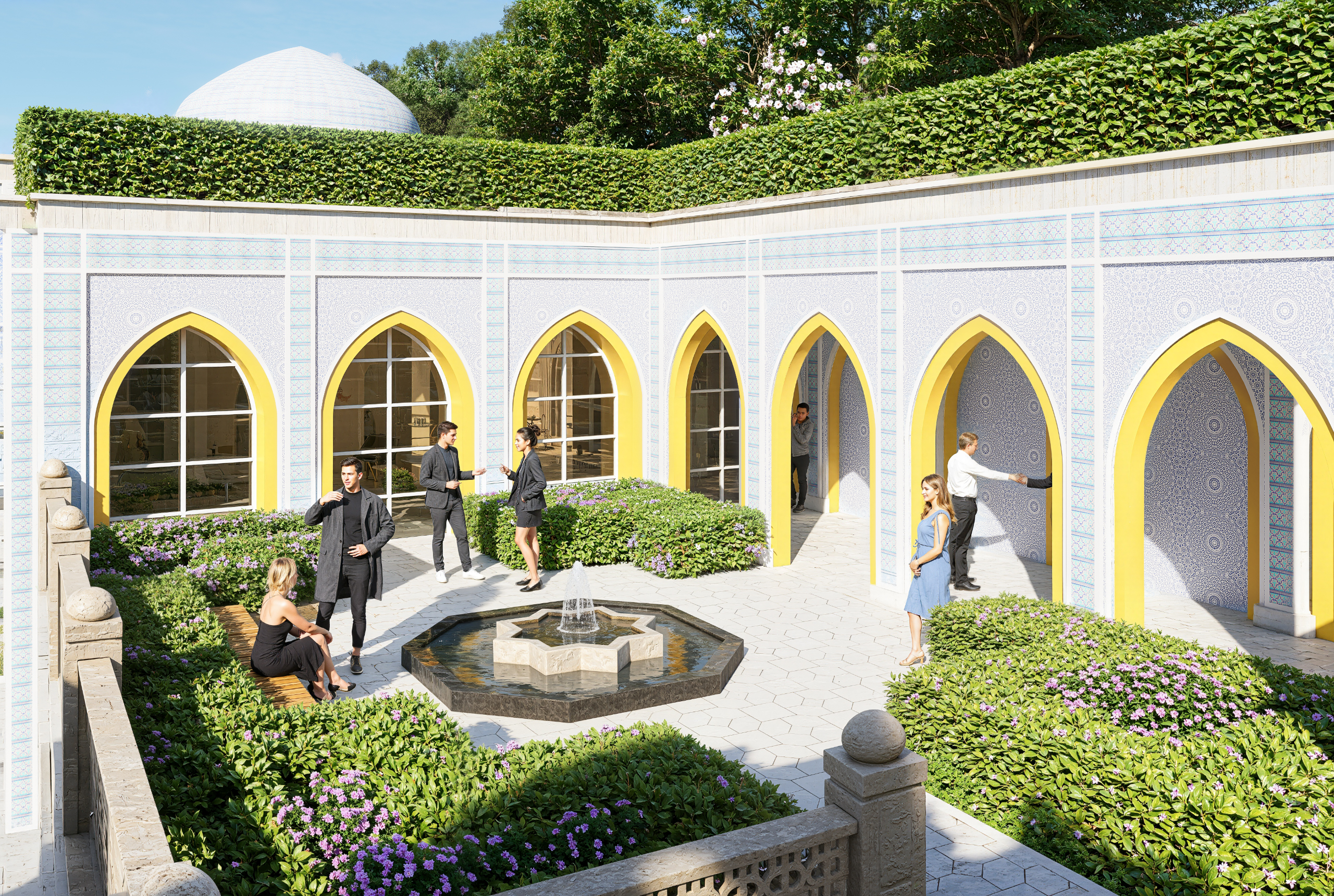
A rendering of the Uzbekistan Garden at the 15th China (Wenzhou) International Garden Expo. [Photo provided to ezhejiang.gov.cn]
The garden's flowing water will symbolize the journey from mountain to sea and evoke the historical flow of goods and ideas. At its highest point, the "Camel Bell Garden" will offer views of Wenzhou's hills and waterways, linking past caravan routes with the modern cityscape.
Beyond the expo, the Uzbekistan Garden is planned as a long-term cultural venue for Central Asian-themed exhibitions and events.